Dulcolax is a well-known stimulant laxative used to relieve occasional constipation. This guide explains the recommended Dulcolax dosage so you can get effective results while lowering the chance of side effects. Using the correct dose matters — too little may not help, and too much can cause discomfort. Below we cover the active ingredient (bisacodyl), adult dosing guidelines, important safety warnings, and common questions about using Dulcolax. By the end, you’ll have clear, practical guidance for safe, effective use.
What Dulcolax Is and How It Eases Constipation
Dulcolax is a stimulant laxative that encourages bowel movements by making the intestines contract more vigorously. Its active ingredient, bisacodyl, triggers the intestinal muscles and speeds stool through the digestive tract. That makes it useful for short-term relief of occasional constipation, providing relatively fast results and helping restore regular bowel habits when used as directed.
What is the active ingredient bisacodyl in Dulcolax?
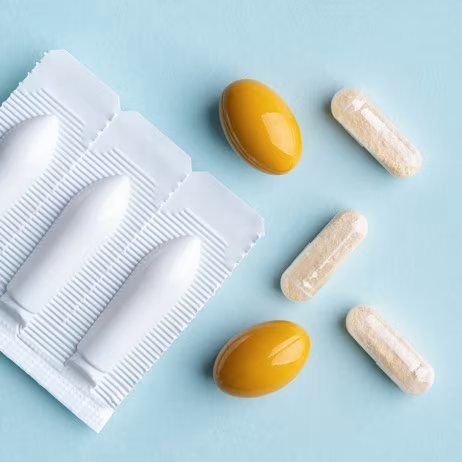
Bisacodyl is the active compound in Dulcolax and is effective at relieving constipation. It works by mildly irritating the intestinal lining to prompt contractions, which moves stool along. That action also helps the intestines absorb more water, softening stool for easier passage. Bisacodyl comes in oral tablets and suppositories, so you can choose the form that fits your needs and timing.
How does Dulcolax work as a stimulant laxative?
As a stimulant laxative, Dulcolax directly affects the intestinal wall to increase muscle contractions and shorten transit time. Oral tablets usually produce a bowel movement within 6 to 12 hours, while suppositories often act faster — commonly within 15 minutes to an hour. Knowing this timing helps you plan when to take Dulcolax for the best results.
Recommended Dulcolax Dosage Instructions for Adults
Adult dosing for Dulcolax depends on the product form. Follow these guidelines to achieve relief safely and reduce the risk of side effects.
Dosage Form | Recommended Dosage | Frequency |
Dulcolax Tablets | 5-15 mg (1-2 tablets) | Once daily at bedtime |
Dulcolax Suppositories | 10 mg (1 suppository) | Once daily as needed |
Sticking to these dosing instructions helps you get the intended effect while lowering the chance of unwanted reactions.
What is the standard Dulcolax adult dosage by form?
For adults, tablet doses typically range from 5 to 15 mg (one or two tablets) taken once daily, preferably at bedtime so the effect occurs the next morning. For suppositories, a single 10 mg dose can be used as needed. Following these recommendations helps ensure safe and effective relief.
In some clinical settings, bisacodyl is also used as part of colon preparation protocols where dosing is supervised by healthcare professionals.
Dulcolax (Bisacodyl) Dosage in Colon Cleansing Protocols In clinical practice, one colon cleansing protocol used PEG-3350 at 2 g/kg/day plus Dulcolax (Bisacodyl, Boehringer Ingelheim, TX USA) 5 mg/day for 2 days. Colon preparation was graded from 1 to 5, with a score ≥ 4.0 considered adequate. Colon cleansing protocol in children: research conditions vs. clinical practice, D Preston, 2018
How often and when should adults take Dulcolax for effective relief?
To maximize effectiveness, take Dulcolax tablets in the evening so bowel movements typically occur the next morning (6–12 hours later). Suppositories work more quickly and can be used when needed. Do not exceed the recommended frequency to avoid dependence or adverse effects.
Safety Warnings and Possible Side Effects of Dulcolax
Dulcolax is generally safe for most adults when used short-term, but be aware of possible side effects and precautions. Talk with your healthcare provider if you have chronic health issues or take other medications.
What are common side effects related to Dulcolax dosage?
Typical side effects include abdominal cramps, diarrhea, and nausea. These are often mild and resolve as your body adjusts. If you experience severe abdominal pain or ongoing diarrhea, stop taking the product and contact a healthcare professional. It’s also important to recognize rarer but more serious reactions linked to bisacodyl.
Although uncommon, some reports associate bisacodyl with more severe gastrointestinal events.
Bisacodyl Linked to Ischemic Colitis Risk Among 43,958 adverse event reports related to bowel cleansers, 75 cases of ischemic colitis (IC) were identified. Bisacodyl showed the strongest disproportionality signal for IC (reporting odds ratio (ROR) = 237.25), with a reporting proportion of 7.9%, followed by PEG (ROR = 2.18) and OSS. Oral bowel cleansers and ischemic colitis risk: A real-world disproportionality analysis, 2025
When should Dulcolax use be avoided or limited?
Avoid or limit Dulcolax if you have certain gastrointestinal conditions, severe abdominal pain of unknown origin, or if you’re dehydrated or have electrolyte imbalances — discuss this with your doctor. If you’re exploring treatments for respiratory conditions such as COPD, one prescription alternative is Breztri Aerosphere, which is prescribed to help manage breathing symptoms.
Where to Find Answers to Common Questions About Dulcolax Dosage
Below are answers to frequent questions that help clarify safe and effective Dulcolax use.
Can Dulcolax be used daily and what are the dosage limits?
Dulcolax is intended for short-term, occasional use, not daily long-term therapy. Regular use can cause dependence, where bowel function becomes reliant on laxatives. Follow the recommended dose and consult your healthcare provider if you need laxatives frequently. Do not exceed the maximum recommended dose.
Is Dulcolax safe during pregnancy and for children or pets?
Dulcolax should not be used in pregnancy without medical advice — pregnant women should consult their healthcare provider about safer options for constipation. It is not recommended for children under 6 years old unless directed by a physician. Do not give Dulcolax to pets; it is formulated for human use and may be unsafe for animals.
Research exploring bisacodyl’s safety profile covers dosing, pregnancy considerations, and reported adverse reactions.
Bisacodyl Laxative: Dosage, Safety, and Adverse Reactions The study reviewed dose forms, frequency, safety in pregnancy and lactation, and adverse reactions during a 10-month period (January to October 2023). Bisacodyl was the most prescribed laxative (48.7%) in Nasiriyah, followed by lactulose (25.0%). Oral forms were preferred (81.2%). Safety, efficacy, and cost played significant roles in selection. Assessment of administration pattern of laxatives in pharmacies in Nasiriya City, Iraq, L Jabbar, 2025
Frequently Asked Questions
What should I do if I miss a dose of Dulcolax?
If you miss a dose, take it when you remember unless your next scheduled dose is near — in that case, skip the missed dose. Do not double up to make up for a missed dose, as that raises the risk of side effects. If you frequently forget doses, set a reminder or speak with your healthcare provider about managing your constipation differently.
Can I take Dulcolax with other medications?
Check with your healthcare provider before combining Dulcolax with other medicines. Some drugs can interact with bisacodyl or affect electrolyte balance, which may change how the laxative works or increase side effect risk — this is especially important for people on heart medications, diuretics, or other laxatives. Always tell your clinician about all prescriptions and supplements you take.
How long can I safely use Dulcolax?
Dulcolax is intended for short-term relief of occasional constipation. Extended use can lead to dependence and diminished bowel function. Generally, do not use Dulcolax for more than one week without medical advice. If constipation persists, consult a healthcare professional to identify underlying causes and alternative treatments.
Are there any dietary recommendations while using Dulcolax?
A balanced, fiber-rich diet—fruits, vegetables, whole grains, and legumes—can help reduce the need for laxatives and support regular bowel movements. Staying well hydrated also softens stool and improves digestive health. If you need personalized dietary guidance while using laxatives, consult your healthcare provider or a dietitian.
What should I do if I experience severe side effects from Dulcolax?
If you develop severe symptoms such as intense abdominal pain, persistent diarrhea, or signs of an allergic reaction (rash, itching, swelling, or difficulty breathing), stop taking Dulcolax and seek medical care immediately. Although serious reactions are rare, they require prompt evaluation by a healthcare professional.
Can lifestyle changes help reduce the need for Dulcolax?
Yes. Regular exercise, a high-fiber diet, adequate fluid intake, and establishing a consistent bathroom routine can all help prevent constipation and reduce reliance on laxatives. If lifestyle changes don’t help, consult a healthcare provider for further evaluation and treatment options.
Find Affordable Brand-Name and Generic Drugs at Drugmart.com At Drugmart.com, we pride ourselves on our affordability, exceptional quality and ease of use when our patients shop for both brand-name and generic drugs. We work closely with the world's most reputable pharmacies to provide high-quality medications from Canada and other tier 1 international sources at unmatched prices, so you can get the treatment you need without worrying about affordability.
Sources
Elkaragy, E., Shamseya, M., Metwally, R., Mansour, E., & Lashen, S. (2024). Efficacy of lubiprostone for functional constipation treatment in adolescents and children: Randomized controlled trial. Journal of Pediatric Gastroenterology and Nutrition, 78(4), 800-809. https://onlinelibrary.wiley.com/doi/10.1002/jpn3.12135
Hung, S., Chen, H., Ke, T., Chen, J., Hsiao, K., Wang, H., … & Chen, W. (2021). Noninferiority clinical trial comparing the bowel cleansing efficacy of sodium phosphate tablets (Quiklean®) with a polyethylene glycol/bisacodyl kit. World Journal of Gastroenterology, 27(5), 428-441. https://www.wjgnet.com/1007-9327/full/v27/i5/428.htm?appgw_azwaf_jsc=j7676J2-qRDMNZ1TCQes6bN4Sn2pXne6E4LvPkEHwyou2ZyjmOTAHzJmAkPrHeb9YZrx2qlcpt7b6584gJRUcSuekzPX_RlpPakDi1RvszUToSYpUwY7ALJvcuKbzpAlgSjklIfkPqvPNNF2nPCEzJ3tlYQF0iUogdZKFCYxwxCXZvF17bDBKkyN3WHUiY8sPGmAyg5eGUOxoXtFg3ELBo0_zkq7BbnBSIeiebD_nJen5ftcT7WXIiYKfYl43hvoat4pdp644YC2d9_dl6gkWX89JVBPkF8750n1E6LtvKEDZzdW5ofbTMdN1Af9zY8ed3VyEZFfTGshVivxYSPwFA
Hung, S., Chen, H., & Chen, W. (2020). A Randomized Trial Comparing the Bowel Cleansing Efficacy of Sodium Picosulfate/Magnesium Citrate and Polyethylene Glycol/Bisacodyl (The Bowklean Study). Scientific Reports, 10(1). https://www.nature.com/articles/s41598-020-62120-w
Related Articles

Canadian Drug Prices vs. U.S. Drug Prices
Have you ever struggled to pay for prescription drugs?; don't worry, you're not alone. With U.S. prescription drug prices rising, it seems more Americans are looking to Canada to save money on their...

BHPM, or bis-(p-hydroxyphenyl)-pyridyl-2-methane, is an active metabolite of bisacodyl, the main ingredient in Dulcolax. The drug bisacodyl is a type of stimulant laxative that works by increasing intestinal movement to...

Dulcolax Onset Times by Product (Guide)
After taking oral Dulcolax tablets, most people experience bowel movements within 12 to 72 hours. Dulcolax suppositories generally produce bowel movements in 15 minutes to 1 hour ( the fastest onset...